Understanding Hair Colour, Skin Colour & Melanin™
Understanding the Science Behind Personalised Laser Hair Reduction
Why Hair Colour, Skin Type & Melanin Matter
Welcome to Understanding Hair Colour, Skin Colour & Melanin™
Every individual has unique hair and skin characteristics.
Hair may be black, brown, blonde, red, grey or white. Skin tones vary considerably between individuals and across different ethnic backgrounds.
These natural differences are primarily influenced by melanin, the pigment responsible for colouring both the skin and hair.
Understanding melanin is one of the most important aspects of Laser Hair Reduction because it influences how laser energy interacts with the hair follicle and how treatment programmes are personalised.
At Aeternitas, we believe every successful treatment begins with understanding your individual biology rather than applying a one-size-fits-all approach.
Because personalised care begins with understanding.
What Is Melanin?
Melanin is a naturally occurring pigment produced by specialised cells known as melanocytes.
It gives colour to:
- Hair.
- Skin.
- Eyes.
Melanin also plays an important protective role by helping the skin respond to ultraviolet (UV) radiation from the sun.
The amount, type and distribution of melanin vary naturally between individuals and are influenced by genetics.
The Two Main Types of Melanin
Eumelanin
Eumelanin is the darker form of melanin.
It is responsible for:
- Black hair.
- Brown hair.
- Darker skin tones.
Hair containing higher levels of eumelanin generally absorbs laser energy more efficiently.
Pheomelanin
Pheomelanin is a lighter pigment responsible for:
- Blonde hair.
- Red hair.
- Lighter skin tones.
Because pheomelanin absorbs laser energy differently, some lighter hair colours may respond less predictably to treatment.
Why Hair Colour Matters
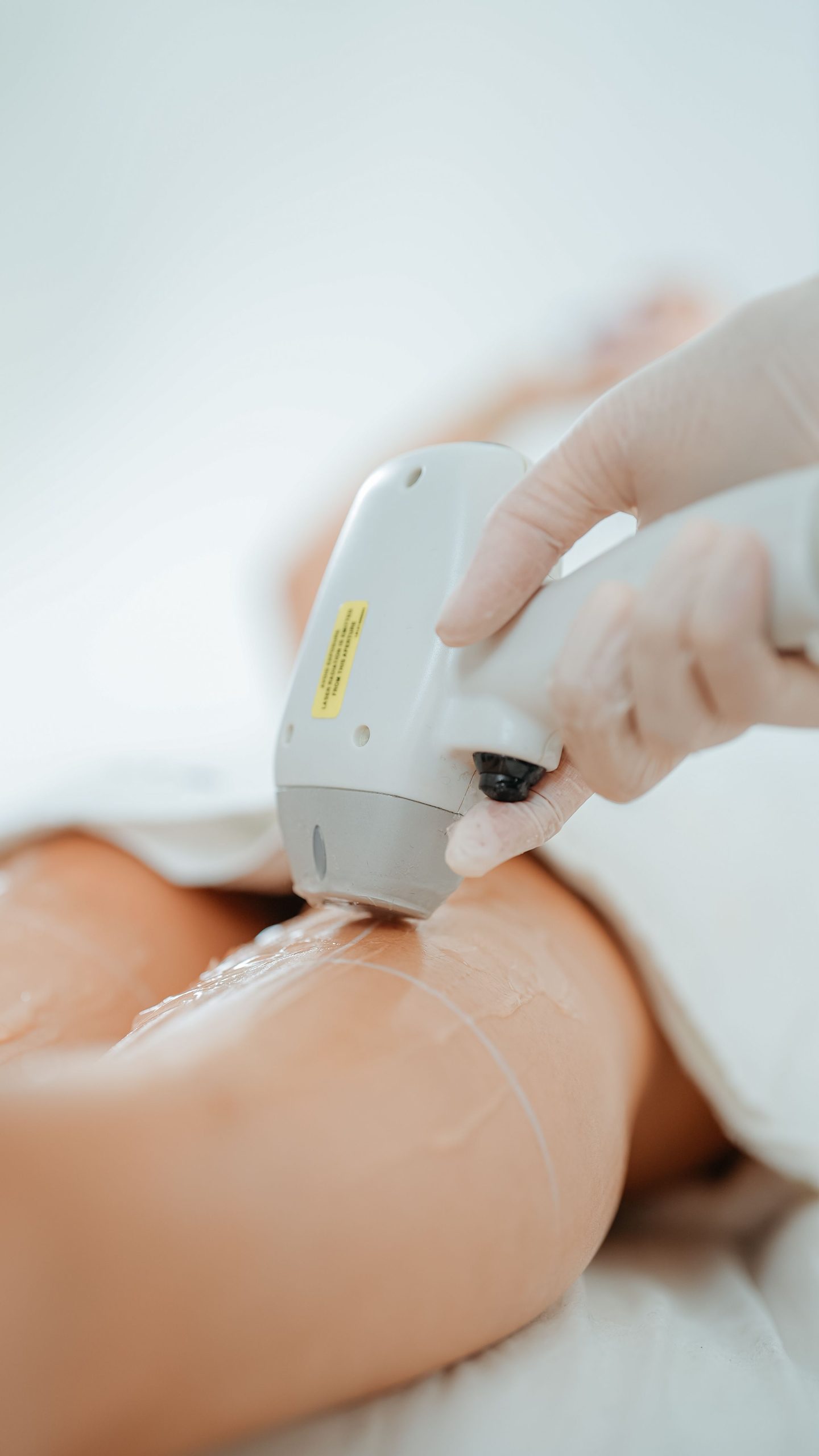
Laser Hair Reduction works by delivering carefully controlled light energy that is preferentially absorbed by melanin within the hair.
Generally speaking:
Hair colours that often respond well include:
- Black.
- Dark brown.
- Medium brown.
These hairs usually contain greater concentrations of melanin.
Hair colours that may respond less effectively include:
- Blonde.
- Red.
- Grey.
- White.
These hairs contain significantly less melanin, meaning there is less pigment available to absorb laser energy.
This is one of the reasons why your consultation includes a detailed assessment of your hair characteristics before treatment recommendations are made.
Why Skin Colour Matters
Melanin is also present within the skin.
Because laser energy interacts with melanin, the amount of pigment within the surrounding skin is an important consideration when selecting treatment settings.
Modern laser technologies, including the EXFU™ Laser Hair Reduction Systems used at Aeternitas, allow treatment parameters to be personalised according to your individual skin type and hair characteristics.
This helps maximise safety while supporting effective treatment outcomes.
Understanding Fitzpatrick Skin Types
One of the tools commonly used during assessment is the Fitzpatrick Skin Type Classification.
This classification considers how your skin typically responds to ultraviolet (UV) exposure, including whether it burns or tans.
It helps guide safe treatment planning alongside many other clinical considerations.
The Fitzpatrick system includes six skin types, ranging from very fair skin that burns easily to deeply pigmented skin that rarely burns.
However, it is only one part of our comprehensive Clinical Assessment Framework™ and should never be used in isolation.
Why Personalisation Matters
Although two people may appear to have similar hair, important biological differences often exist.
Treatment planning considers:
- Hair colour.
- Hair thickness.
- Hair density.
- Skin tone.
- Treatment area.
- Previous hair removal methods.
- Hormonal influences.
- Medical history.
- Lifestyle.
- Treatment goals.
No single laser setting is appropriate for every individual.
Personalisation is central to safe, evidence-informed care.
Hair Thickness Matters Too
Hair thickness also influences treatment planning.
Coarse terminal hairs usually contain more melanin than very fine vellus hairs.
This may influence how different hairs respond during treatment.
For this reason, both hair colour and hair thickness are assessed during your consultation.
Hair Colour May Change Throughout Life
Hair colour is not fixed.
Natural changes may occur due to:
- Healthy ageing.
- Hormonal influences.
- Genetics.
- Certain medical conditions.
- Some medications.
As hair gradually loses pigment, treatment suitability may also change.
Regular review appointments allow treatment plans to be adapted where appropriate.
Hair Colour Can Vary Across the Body
Many individuals have different hair colours on different parts of the body.
For example:
- Facial hair may differ from leg hair.
- Beard hair may be darker than chest hair.
- Underarm hair often differs from arm hair.
These natural variations are another reason why treatment settings may differ between anatomical regions.
Could Laser Hair Reduction Be Suitable For Me?
Laser Hair Reduction may be suitable for a wide variety of individuals.
During your consultation we assess:
- Hair colour.
- Hair thickness.
- Hair density.
- Skin characteristics.
- Fitzpatrick Skin Type.
- Treatment area.
- Medical history.
- Lifestyle.
- Long-term goals.
This allows us to determine whether treatment is clinically appropriate and to personalise your programme accordingly.
Clinical Assessment Framework™
Every consultation includes careful assessment of factors that influence treatment planning.
These may include:
- Hair colour.
- Hair thickness.
- Hair density.
- Skin pigmentation.
- Fitzpatrick Skin Type.
- Recent sun exposure.
- Fake tanning products.
- Medical history.
- Current medications.
- Previous laser or IPL treatments.
- Hormonal influences.
- Tattoos within or near the treatment area.
- Lifestyle factors.
- Treatment expectations.
Our Clinical Assessment Framework™ enables us to personalise every recommendation while prioritising safety and realistic expectations.
Laser Hair Reduction Fact™
Laser Hair Reduction targets melanin within actively growing hairs.
It is the concentration and location of this pigment—not simply the presence of hair—that helps determine how laser energy is absorbed.
Treatment Preparation Tip™
Avoid tanning—both natural and artificial—before treatment.
Recent sun exposure or fake tanning products can temporarily alter skin pigmentation and may influence treatment planning.
Your clinician will advise you when it is safe to proceed.
Laser Safety Spotlight™
Different skin tones require personalised assessment.
Treatment settings should never be selected using a standard approach.
Careful evaluation of both skin and hair characteristics supports safe, evidence-informed treatment planning.
Skin Protection Advice™
Healthy skin contributes to safer Laser Hair Reduction.
Before treatment:
- Protect your skin from excessive UV exposure.
- Avoid fake tanning products.
- Follow your personalised pre-treatment instructions.
- Inform your clinician about any changes in your health or medications.
Aeternitas Safety First™
Every Laser Hair Reduction programme begins with an assessment of your skin and hair characteristics.
If recent tanning, certain medications or active skin conditions increase treatment risk, we may recommend postponing treatment until it is clinically appropriate to proceed.
Patient safety will always take priority over convenience.
Potential Benefits
Where clinically appropriate, personalised Laser Hair Reduction may help support:
- Progressive long-term reduction in unwanted hair.
- Improved convenience.
- Reduced reliance on temporary hair removal methods.
- Reduced ingrown hairs in suitable individuals.
- Improved confidence.
Individual outcomes vary, and results cannot be guaranteed.
Did You Know?™
The colour of your hair is determined by the amount and type of melanin produced within each follicle—not by the hair itself.
Myth vs Science™
Myth
“Laser Hair Reduction works equally well on every hair colour.”
Science
Hair colour influences how laser energy is absorbed.
This is why assessing hair colour and skin characteristics is an essential part of developing a personalised treatment programme.
Aeternitas Clinical Insight™
Successful Laser Hair Reduction is not determined by the laser machine alone.
It depends upon selecting appropriate treatment parameters for your individual biology, understanding how melanin behaves within both the hair and skin, and tailoring every programme according to comprehensive clinical assessment.
Technology is only one part of successful treatment.
Personalisation is what makes that technology effective.
Looking Ahead™
Now that you understand how melanin influences Laser Hair Reduction, the next page explores Fitzpatrick Skin Types & Laser Safety™.
There, we’ll explain how different skin types are assessed, why skin response to sunlight is important, and how personalised treatment planning supports safe and effective care across a diverse range of skin tones.
The Art of Scientific Aesthetics
Frequently Asked Questions
It is a long established fact that a read will be distracted by the readable content of a page when looking at its layout. The point of using Lorem Ipsum is that it has a more or less.
It is a long established fact that a read will be distracted by the readable content of a page when looking at its layout. The point of using Lorem Ipsum is that it has a more or less.
It is a long established fact that a read will be distracted by the readable content of a page when looking at its layout. The point of using Lorem Ipsum is that it has a more or less.
It is a long established fact that a read will be distracted by the readable content of a page when looking at its layout. The point of using Lorem Ipsum is that it has a more or less.
It is a long established fact that a read will be distracted by the readable content of a page when looking at its layout. The point of using Lorem Ipsum is that it has a more or less.