Cheek Hair Reduction™
Personalised Laser Hair Reduction for Unwanted Cheek Hair
Welcome to Cheek Hair Reduction™
The cheeks are one of the most individually variable areas of facial hair growth.
Some people have only fine, light-coloured hairs that are barely visible, while others develop darker, coarser or denser hair across the cheeks due to genetics, ethnicity, hormonal influences or natural ageing. For men, cheek hair often forms part of the beard and may be treated to refine beard contours or reduce density. For women, visible cheek hair may become a cosmetic concern, particularly in bright lighting or when makeup highlights fine facial hairs.
Temporary methods such as shaving, waxing, threading and dermaplaning may provide short-term improvement but often require regular maintenance. Repeated hair removal may also contribute to irritation, ingrown hairs or shaving-related folliculitis in some individuals.
At Aeternitas, our role is to understand your concerns, assess your skin and hair characteristics, and determine whether Laser Hair Reduction is clinically appropriate for your individual needs.
Every recommendation begins with education, comprehensive clinical assessment and personalised care.
Clinical Knowledge Box™
Hair on the cheeks is a normal feature of facial anatomy.
Many people naturally have fine vellus hairs (“peach fuzz”), while others develop terminal hairs, which are darker, thicker and more visible.
The presence of facial hair is not abnormal. Laser Hair Reduction is a personal grooming choice, and treatment is tailored to your individual preferences, facial anatomy and long-term goals.
At a Glance™
✔ Progressive long-term hair reduction
✔ Personalised treatment programme
✔ Advanced EXFU™ Laser Technology
✔ Mandatory consultation and patch test
✔ Usually minimal downtime
✔ Safety-first clinical approach
Treatment Area Overview™
The cheeks occupy the largest surface area of the face and extend from the cheekbones towards the jawline, nose and sideburn region.
Hair within this area varies considerably between individuals and may consist of:
- Fine vellus hairs.
- Coarse terminal hairs.
- Beard hair in men.
- Hair extending from the sideburn region.
- Isolated darker hairs.
Treatment planning requires careful assessment to maintain natural facial balance and achieve smooth transitions between adjacent treatment areas.
Treatment Overview™
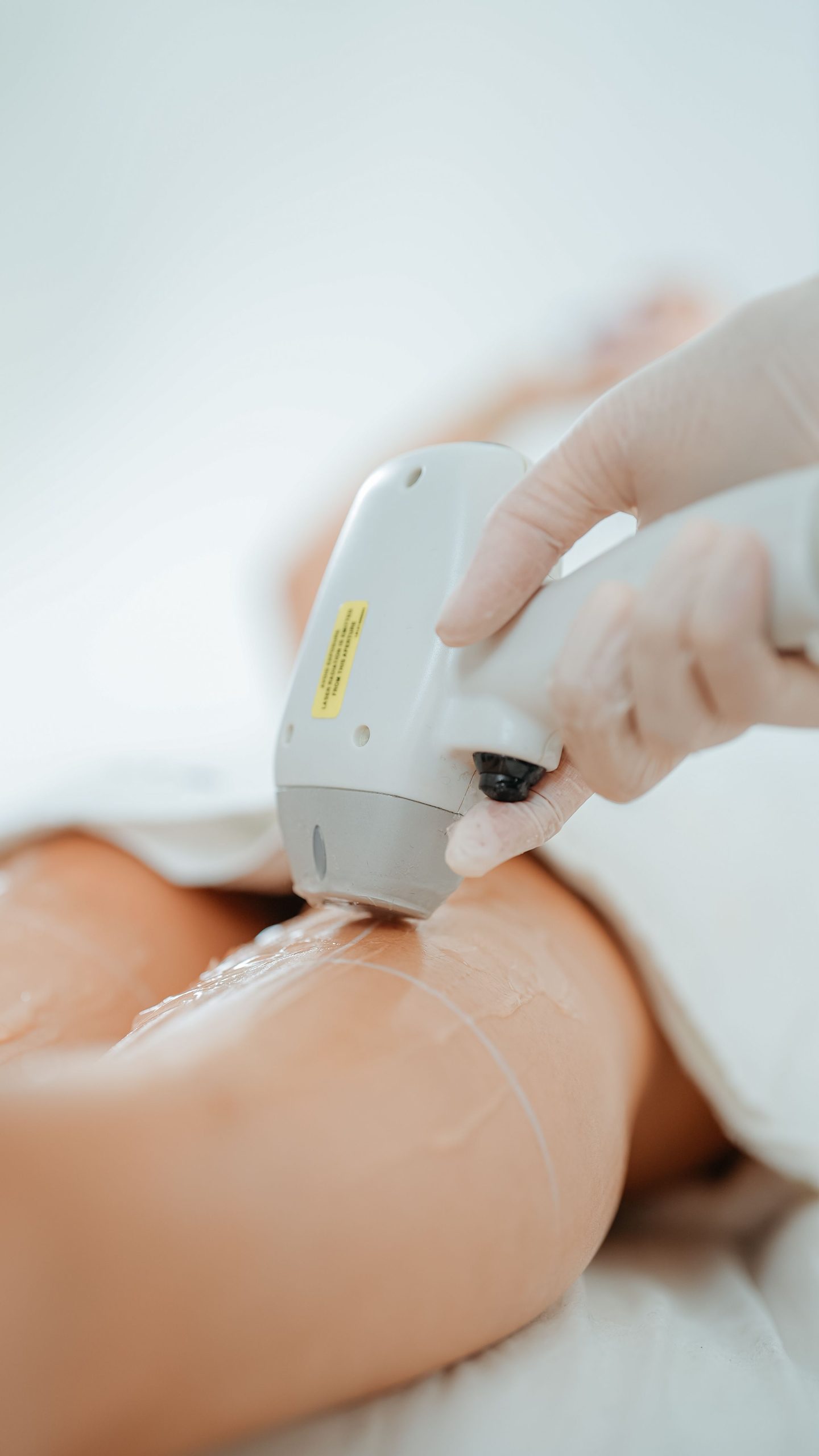
Cheek Hair Reduction uses carefully controlled laser energy to target actively growing hair follicles within the treatment area.
The objective is to achieve progressive, long-term reduction in unwanted hair while preserving natural facial contours and reducing reliance on repeated temporary hair removal methods.
Treatment is delivered as part of a personalised programme developed following your Clinical Assessment Framework™.
Why Clients Choose This Treatment™
Clients commonly choose Cheek Hair Reduction to:
- Reduce unwanted cheek hair.
- Reduce visible facial hair.
- Reduce beard density.
- Refine beard contours.
- Reduce shaving frequency.
- Reduce waxing, threading or dermaplaning.
- Help reduce ingrown hairs where clinically appropriate.
- Help manage shaving-related folliculitis.
- Simplify daily grooming.
- Improve confidence.
Every treatment programme reflects your individual goals rather than current aesthetic trends.
Professional Suitability Snapshot™
This treatment may be suitable for:
✔ Women
✔ Men
✔ Most skin types following assessment
✔ Adults aged 18 years and over
Treatment may not be appropriate if:
✖ Active skin infection is present.
✖ Significant inflammation affects the treatment area.
✖ Recent sunburn is present.
✖ Certain contraindications are identified during consultation.
Suitability is always determined following comprehensive clinical assessment.
Is This Treatment Suitable for Me?
Laser Hair Reduction is not suitable for everyone.
Your clinician will assess:
- Hair colour.
- Hair thickness.
- Hair density.
- Distribution of vellus and terminal hairs.
- Skin type.
- Fitzpatrick Skin Type.
- Medical history.
- Current medications.
- Hormonal influences.
- Previous hair removal methods.
- Recent cosmetic procedures.
- Lifestyle.
- Treatment expectations.
If changes in facial hair suggest an underlying hormonal or medical cause, further medical assessment may be recommended before treatment begins.
Clinical Assessment Framework™
Every treatment programme begins with a comprehensive consultation.
This includes:
- Discussion of your concerns and treatment goals.
- Assessment of facial anatomy and cheek contours.
- Hair assessment.
- Skin assessment.
- Medical history review.
- Medication review.
- Assessment for ingrown hairs or folliculitis where present.
- Identification of contraindications and precautions.
- Opportunity to ask questions.
- Development of your personalised treatment programme.
Treatment is recommended only when it is considered clinically appropriate.
Personalised Treatment Planning™
Every face is unique.
Your treatment programme is individually designed according to:
- Hair colour.
- Hair density.
- Hair thickness.
- Distribution of vellus and terminal hairs.
- Natural beard pattern where applicable.
- Skin characteristics.
- Fitzpatrick Skin Type.
- Medical history.
- Hormonal influences.
- Current medications.
- Lifestyle.
- Previous hair removal methods.
- Individual treatment goals.
Our personalised approach ensures every recommendation reflects your facial anatomy, biology and expectations rather than a standard treatment protocol.
Mandatory Patch Test™
Your Safety Comes First
Before commencing Laser Hair Reduction, every client undergoes a mandatory consultation and patch test.
Patch testing forms an essential part of our Clinical Assessment Framework™ and helps determine whether treatment is appropriate for your skin and hair characteristics.
During your patch test we assess:
- Your skin’s immediate response.
- Hair characteristics.
- Skin sensitivity.
- Treatment comfort.
- Appropriate treatment parameters.
- Factors that may influence your personalised treatment programme.
Where clinically appropriate, sufficient time will be allowed between your patch test and first treatment appointment to review your skin’s response before treatment proceeds.
Treatment begins only when your clinician is satisfied that it is safe and appropriate.
EXFU™ Technology
At Aeternitas, technology supports clinical expertise—it never replaces it.
Every client has unique skin characteristics, hair colour, hair density and treatment goals. For this reason, the choice of laser technology forms part of your personalised treatment programme and is based upon comprehensive clinical assessment.
Depending upon your individual assessment, treatment may be performed using one of our advanced EXFU™ Laser Hair Reduction Systems:
- **EXFU™ Violin Triple-Wave Diode Laser Hair Reduction System™
- EXFU™ ICE Laser Hair Reduction System™**
Technology selection considers:
- Hair colour and pigment.
- Hair thickness and density.
- Distribution of terminal and vellus hair.
- Skin characteristics.
- Fitzpatrick Skin Type.
- Previous treatment history.
- Individual response to treatment.
- Beard growth pattern where applicable.
- Clinical assessment findings.
Our objective is always to select the technology and treatment parameters most appropriate for your individual treatment programme.
Expected Treatment Timeline™
Every Laser Hair Reduction programme follows a structured clinical pathway designed to support safe, personalised care.
Step 1
Consultation & Clinical Assessment
↓
Step 2
Mandatory Patch Test
↓
Step 3
First Treatment Appointment
↓
Step 4
Personalised Treatment Programme
↓
Step 5
Clinical Review & Progress Assessment
↓
Step 6
Maintenance Treatments (where appropriate)
Every programme is reviewed regularly and adjusted according to your individual progress and treatment response.
Your Treatment Journey™
Consultation
Your journey begins with a comprehensive consultation where we discuss your concerns, assess your cheek hair characteristics and explain how Laser Hair Reduction works.
This appointment allows you to understand realistic expectations, ask questions and decide whether treatment is appropriate for your individual goals.
Clinical Assessment & Patch Test
Following consultation, your clinician completes your Clinical Assessment Framework™ and performs your mandatory patch test.
Treatment only proceeds once your clinician is satisfied that Laser Hair Reduction is safe and clinically appropriate.
Treatment Appointment
On the day of treatment:
- Your cheeks will be cleansed and prepared.
- Treatment boundaries will be agreed with you.
- Protective eyewear will be worn by everyone present.
- Personalised laser settings will be selected.
- Treatment will be delivered using carefully controlled techniques.
Where treatment involves beard sculpting or blending into adjacent facial areas, careful planning is undertaken to maintain natural facial symmetry.
Immediately Following Treatment
Following treatment, some individuals may experience:
- Mild redness.
- Temporary swelling around individual follicles.
- Mild warmth within the treated skin.
These responses are usually temporary and represent a normal response following Laser Hair Reduction.
Recovery
Most clients resume their normal daily activities shortly afterwards.
Your clinician will provide personalised aftercare advice together with any temporary precautions appropriate for your treatment programme.
Ongoing Treatment Programme
Hair grows in natural cycles, meaning Laser Hair Reduction is delivered over a personalised series of appointments.
Your programme will be reviewed regularly and adjusted according to:
- Hair response.
- Hair density.
- Beard contour where applicable.
- Hormonal influences.
- Long-term treatment goals.
Preparing for Treatment™
To help optimise treatment safety and effectiveness, you may be advised to:
- Avoid waxing, threading, tweezing or dermaplaning before treatment.
- Follow shaving guidance where appropriate.
- Avoid excessive sun exposure and sunbeds.
- Avoid fake tanning products.
- Attend with clean skin free from makeup, moisturisers, SPF products and perfume where possible.
- Inform us of any changes to your medical history or medications.
Please also inform your clinician if you have recently:
- Received anti-wrinkle injections.
- Had dermal fillers.
- Undergone chemical peels.
- Had microneedling.
- Used prescription retinoids.
- Started new medication.
- Developed skin irritation or infection affecting the cheeks.
- Experienced an outbreak of cold sores (where treatment extends towards the mouth).
Preparation advice is always personalised according to your individual assessment.
Aftercare™
Following treatment, your clinician will provide personalised aftercare instructions designed to support normal skin recovery.
General recommendations may include:
- Applying broad-spectrum sunscreen daily.
- Protecting the treated skin from excessive ultraviolet exposure.
- Avoiding excessive heat, including hot baths, saunas and steam rooms, for the recommended period.
- Avoiding unnecessary rubbing, scratching or exfoliating the treated area.
- Following your personalised skincare advice.
Your clinician will also explain:
- When normal skincare may be resumed.
- When makeup may be reapplied.
- When shaving may safely recommence if appropriate.
- When exercise may be resumed.
- Which skincare products should be temporarily avoided.
Recommendations will always be tailored to your individual treatment programme.
Expected Progress™
Laser Hair Reduction produces gradual improvement because hairs enter active growth at different stages of the natural hair cycle.
Treatment is therefore delivered over a personalised series of appointments rather than as a single procedure.
Your programme considers:
- Hair biology.
- Distribution of vellus and terminal hairs.
- Beard growth pattern where appropriate.
- Hormonal influences.
- Individual treatment response.
- Long-term treatment goals.
- Maintenance requirements where appropriate.
Our objective is to achieve gradual, natural-looking improvement while respecting the unique characteristics of your facial anatomy.
Potential Benefits™
Where clinically appropriate, Cheek Hair Reduction may help support:
- Progressive long-term reduction in unwanted cheek hair.
- Reduction of visible facial hair.
- Refinement of beard contours where requested.
- Reduced reliance on shaving, waxing, threading or dermaplaning.
- Reduced occurrence of ingrown hairs.
- Improvement in shaving-related folliculitis where appropriate.
- Simplified grooming routines.
- Improved convenience.
- Increased confidence.
Individual outcomes vary and cannot be guaranteed.
Possible Risks & Considerations™
All clinical procedures involve potential risks and considerations which will be discussed during your consultation.
Temporary treatment responses may include:
- Mild redness.
- Temporary swelling around treated follicles.
- Mild skin sensitivity.
- Temporary pigment changes in some individuals.
- Individual variation in treatment response.
Where facial hair is significantly influenced by hormonal factors, occasional maintenance treatments may form part of your long-term programme.
Laser Hair Reduction may not be appropriate for everyone, and treatment may occasionally need to be postponed or modified to support your safety.
When Should I Contact Aeternitas?™
Although most treatment responses are mild and temporary, please contact us promptly if you experience:
- Increasing pain.
- Significant swelling.
- Blistering.
- Persistent redness.
- Signs of infection.
- Worsening folliculitis.
- Unexpected skin reactions.
- Any concerns regarding your recovery.
Your wellbeing remains our priority throughout every stage of your treatment programme.
Aeternitas Safety First™
The cheeks represent one of the largest facial treatment areas and often include a combination of fine vellus hairs and coarser terminal hairs.
Successful treatment depends upon careful assessment, appropriate technology selection and realistic treatment planning.
Every Laser Hair Reduction programme begins with:
- Comprehensive consultation.
- Clinical Assessment Framework™.
- Mandatory patch testing.
- Personalised treatment planning.
- Individual treatment parameters.
- Ongoing clinical review.
If we believe treatment should be postponed, modified or is unlikely to achieve your desired outcome, we will explain our recommendations honestly and discuss the most appropriate alternatives.
Our responsibility is not simply to provide treatment—it is to recommend treatment only when it is safe, clinically appropriate and in your best interests.
Our Commitment to Honest Advice™
Not every type of facial hair responds in the same way to Laser Hair Reduction.
For example, very fine, lightly pigmented vellus hairs (“peach fuzz”) may respond differently from darker, coarser terminal hairs. During your consultation, we will explain the expected response for your individual hair characteristics and discuss whether treatment is likely to help you achieve your goals.
We believe honest expectations are an essential part of excellent clinical care.
Every recommendation reflects our commitment to:
- Truth
- Trust
- Clinical Excellence
- Personalised Care
Evidence-Informed Care™
Our treatment recommendations are based upon current professional guidance, recognised laser safety principles, manufacturer recommendations and ongoing clinical education.
Clinical protocols are reviewed regularly to reflect developing evidence and best practice, ensuring every treatment programme remains personalised, appropriate and centred on your wellbeing.
Clinical Governance™
Every Laser Hair Reduction treatment is delivered in accordance with:
- Current professional guidance.
- Manufacturer recommendations.
- Evidence-informed clinical practice.
- Aeternitas Clinical Governance Framework™.
- Individual clinical assessment.
- Personalised treatment planning.
This commitment helps ensure consistency, safety and high clinical standards throughout your treatment journey.
Clinical Terminology Notice™
Throughout the AETERNITAS TREATMENT COLLECTION™, the term Laser Hair Reduction is used in accordance with recognised professional terminology and current evidence-informed clinical practice.
Treatment outcomes vary between individuals and are influenced by factors including hair colour, hair growth cycle, skin characteristics, hormonal influences, medical history and adherence to your personalised treatment programme.
All treatment recommendations are based upon a comprehensive Clinical Assessment Framework™, mandatory consultation, mandatory patch testing, evidence-informed clinical judgement and personalised treatment planning.
Where treatment is not considered appropriate, we will explain our recommendations openly and discuss the most suitable alternatives where applicable.
Related Educational Articles™
Understanding your treatment begins with understanding the science behind it.
We recommend exploring the following resources within the AETERNITAS Clinical Library™.
Foundations of Laser Hair Reduction™
- Understanding Hair Growth & the Hair Cycle™
- Hair Follicle Anatomy & Laser Science™
- Understanding Hair Colour, Skin Colour & Melanin™
- Fitzpatrick Skin Types & Laser Safety™
- Why Multiple Laser Sessions Are Required™
- Understanding Permanent Hair Reduction™
Hair Growth & Hair Concerns™
- Understanding Vellus (“Peach Fuzz”) & Terminal Hair™
- Understanding Unwanted Hair Growth™
- Why Hair Grows in Different Areas™
- Hormonal Hair Growth™
- Female Facial Hair™
- Male Grooming & Hair Reduction™
- Hirsutism Explained™
- Hypertrichosis Explained™
- Ingrown Hairs & Pseudofolliculitis™
- Razor Bumps & Shaving Irritation™
- Folliculitis & Hair-Related Skin Concerns™
Clinical Considerations & Safety™
This expanding collection includes:
- Patch Testing & Laser Safety™
- Tattoos & Laser Hair Reduction™
- Pregnancy & Breastfeeding™
- Medications & Photosensitivity™
- Sun Exposure & Fake Tan™
- Cosmetic Procedures & Laser Timing™
- Cold Sores & Laser Hair Reduction™
- Moles, Birthmarks & Pigmented Lesions™
- Skin Conditions & Laser Hair Reduction™
Continue Exploring Facial Hair Reduction™
Continue exploring the Facial Hair Reduction™ series:
- Between the Brows (Glabella) Hair Reduction™
- Upper Lip Hair Reduction™
- Lower Lip Hair Reduction™
- Chin Hair Reduction™
- Jawline Hair Reduction™
- Sideburn Hair Reduction™
- Beard Line Hair Reduction™
- Full Face Hair Reduction™
- Neck Hair Reduction™
- Ear Hair Reduction™
- Nasal Hair Reduction™
- Forehead Hair Reduction™
Each treatment page follows the same evidence-informed clinical framework, creating a consistent journey throughout the AETERNITAS Treatment Collection™.
Why Choose Aeternitas™?
Choosing Laser Hair Reduction is about more than reducing unwanted hair—it is about choosing a clinic that values education as highly as treatment.
At Aeternitas, every recommendation begins with understanding your skin, hair characteristics and personal goals before considering any procedure.
Your personalised programme includes:
- Comprehensive consultation.
- Clinical Assessment Framework™.
- Mandatory patch testing.
- Personalised treatment planning.
- Advanced EXFU™ Laser Technology.
- Evidence-informed clinical practice.
- Ongoing clinical review throughout your treatment programme.
Our recommendations are always guided by our four founding principles:
- Truth
- Trust
- Clinical Excellence
- Personalised Care
If treatment is unlikely to provide meaningful benefit, we will explain this honestly and discuss the most appropriate alternatives.
Begin Your Personalised Consultation™
Every successful treatment programme begins with understanding.
During your consultation we will:
- Discuss your concerns and expectations.
- Complete your Clinical Assessment Framework™.
- Review your medical history and medications.
- Assess your skin and hair characteristics.
- Distinguish between vellus and terminal hair where appropriate.
- Perform your mandatory patch test.
- Explain realistic treatment expectations.
- Answer your questions.
- Develop your personalised treatment programme where appropriate.
Our aim is to ensure every recommendation reflects your individual biology, lifestyle and long-term goals while maintaining the highest standards of clinical safety.
The Art of Scientific Aesthetics
Frequently Asked Questions

Laser Hair Reduction is designed to achieve progressive, long-term reduction in unwanted hair. Individual outcomes vary according to hair colour, hair growth cycles, hormonal influences and your individual biological response.
Some clients achieve their desired level of reduction following their personalised treatment programme, while others may choose occasional maintenance treatments where clinically appropriate.
Many people ask whether Laser Hair Reduction can treat fine facial hair, often referred to as vellus hair or “peach fuzz.”
During your consultation we will assess:
- Hair colour.
- Hair thickness.
- Hair density.
- Pigment within the hair shaft.
- Your treatment goals.
Very fine, lightly pigmented hairs may respond differently from darker, coarser terminal hairs. We will always provide honest advice regarding the expected response before recommending treatment.
Yes.
Many men choose Cheek Hair Reduction to:
- Reduce beard density.
- Create cleaner beard contours.
- Improve facial symmetry.
- Simplify shaving.
- Reduce ingrown hairs.
- Help manage shaving-related folliculitis.
Treatment can often be tailored to refine the beard rather than remove it completely.
Hair growth across the cheeks may become more noticeable because of:
- Genetics.
- Ethnicity.
- Natural hormonal influences.
- Healthy ageing.
- Individual biology.
These changes are often entirely normal and do not necessarily indicate an underlying medical condition.
Where clinically appropriate, further medical assessment may be recommended before treatment begins.
Patch testing forms an essential part of our Clinical Assessment Framework™.
It allows us to:
- Assess your skin’s response.
- Confirm treatment suitability.
- Determine appropriate treatment parameters.
- Assess treatment comfort.
- Support personalised treatment planning.
Treatment only proceeds when it is considered safe and clinically appropriate.
Because dermaplaning removes surface hair, your clinician will advise whether it should be temporarily avoided during your treatment programme.
Individual recommendations depend upon your personalised treatment plan and treatment goals.
Where shaving contributes to repeated irritation, ingrown hairs or folliculitis, Laser Hair Reduction may help by progressively reducing active hair growth.
Your clinician will determine whether treatment is appropriate for your individual circumstances.